GEO for agencies: managing AI visibility for clients at scale
AI visibility is the new line item clients are asking about. How agencies productise GEO - scoping it, reporting it, pricing it, and managing many brands across engines without drowning in manual checks.
Muhammet İLBAŞ 9 min read
If you run an agency, you've probably already had the call: a client forwards a screenshot of ChatGPT recommending their competitor and asks "why aren't we in this - and what are you doing about it?" AI visibility is becoming a line item clients expect you to own. The agencies moving early are turning that into a productised service before it becomes a commodity. Here's how to build it.
Productise it like SEO, around a new unit of victory
You already know the shape of this service - it's SEO, re-pointed. The difference is what you're winning: not a ranking position but a mention inside a generated answer. A clean offer has four parts: a baseline audit across engines, a prioritised action plan, the content and authority work to close gaps, and a recurring report that shows visibility and share of voice trending against competitors. Clients instantly understand "are the AI assistants recommending you, and is it improving."
Scope it so it doesn't eat your margin
The trap is treating GEO as bespoke research per client. It isn't - most of the work productises:
Onboarding: define each client's buyer questions, competitors and engines once.
Monitoring: automated, scheduled, multi-engine - not someone re-asking ChatGPT by hand every week.
Reporting: a standard client-ready dashboard, not a hand-built deck per account.
Tracking many brands without drowning
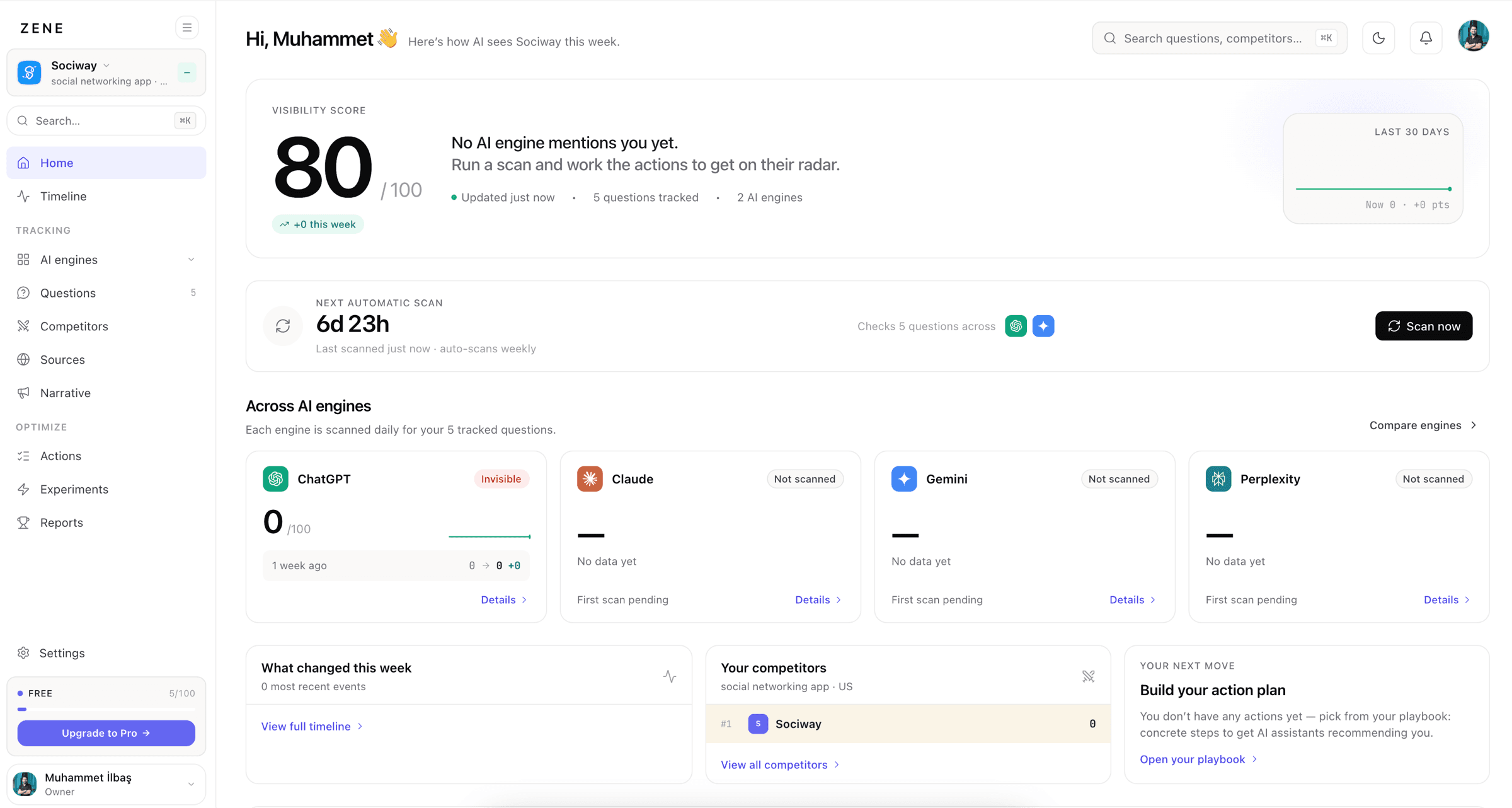
Manual checking falls apart past one brand and one engine - and you're running many brands across five. This is the part to tool. You need each client's questions run across engines on a schedule, competitors in the same frame, and per-client reports you can white-label, so your team spends its hours on strategy and execution instead of repetitive sampling. (We built Zene with multi-brand agency workflows in mind, but the requirement holds whatever you use.)
Pricing and positioning
GEO sells well as a retainer add-on to existing SEO/content work - the data feeds it, and you can show it making the rest of your work measurably move the channel clients are now watching. It also opens the door to clients who've gone quiet on traditional SEO but are anxious about AI. Lead with the audit: a baseline that shows a client being out-recommended by a rival is the easiest "yes" in the conversation.
The window is the opportunity. Right now most agencies don't offer this and most clients don't know who does. Being the agency that already has a GEO answer - with a real audit and a repeatable plan - is a positioning advantage that won't last once it's table stakes.
Want to run a client baseline today? A free Zene audit shows where any brand stands on ChatGPT and Gemini (every major engine on Pro) - a strong way to open the GEO conversation with a prospect.
Frequently asked questions
How can an agency offer GEO as a service?
Package it like SEO but around the new unit of victory - a mention inside an AI answer. A typical offer: a baseline audit across engines, a prioritised action plan, content and authority work to close gaps, and a monthly report showing visibility and share of voice trending against competitors. The deliverable clients understand is 'are the AI assistants recommending you, and is that improving'.
How do agencies track AI visibility for many clients?
Not by hand - manual checking breaks down past one brand and one engine. Agencies use a tracker that runs each client's buyer questions across the major engines on a schedule, tracks competitors in the same frame, and produces client-ready reports, so the team spends its time on strategy and execution rather than re-asking ChatGPT the same questions every week.
Is GEO worth adding to an agency's services?
It's quickly becoming table stakes. Clients are seeing AI answers recommend competitors and asking what to do, and the brands that move early build a durable advantage. For agencies it's both a new retainer line and a way to make existing SEO and content work measurably feed the channel clients are now watching.
GA4's new AI Assistant channel misses some assistants and app clicks land in Direct. The custom channel group, the regex, and what GA4 still can't see.
Keyword tools can't show what buyers ask ChatGPT. Mine sales calls, tickets, Search Console and Reddit, sort by intent, and pick the prompts worth tracking.
How SaaS products get named when buyers ask ChatGPT, Claude or Perplexity for the best software: category clarity, comparison pages, G2, crawlable pricing.
Muhammet İLBAŞ 10 min
Find out if AI recommends you.
Put this guide into practice - get your free visibility score in minutes.
 Muhammet İLBAŞ 9 min