What the checker asks
Three questions a buyer would type. Two name only your category ("What is the best note-taking app?") - they show whether ChatGPT brings you up when nobody mentions you. The third asks for alternatives to your brand, which shows who ChatGPT sees as your competition.
How to read the result
Being named in the category questions is the result that matters: that's where new buyers find you. If rivals keep appearing and you don't, ChatGPT has more - or clearer - evidence about them: comparison pages, reviews and the third-party sources it trusts. How to get ChatGPT to recommend your brand walks through the fixes.
Why one check isn't the whole picture
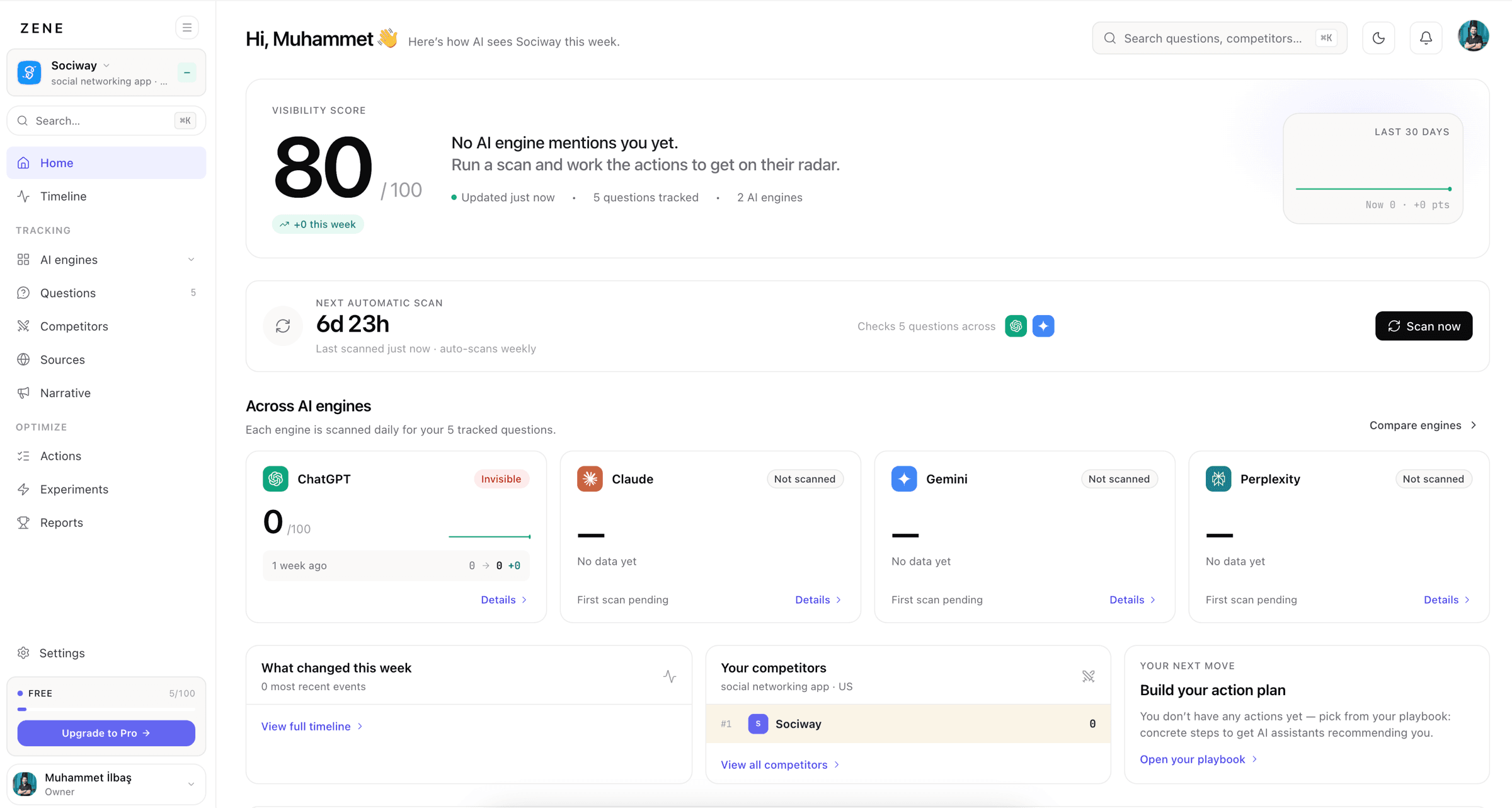
This is one run of ChatGPT per question, without web search, so treat it as a snapshot. Answers drift run to run, and the five engines disagree. A Zene account re-asks your questions on ChatGPT and Gemini for free and - on Pro - on Claude, Perplexity and Grok too, then reports how often you're named with confidence ranges, which sources the engines cite, and what to fix first.
Readable comes before recommended
If ChatGPT doesn't name you, check the groundwork too: can AI crawlers reach your pages, and is the content there without JavaScript? The free AI readiness checker grades 11 public signals - robots.txt, llms.txt, server-rendered text, structured data - with a verdict per engine.