Glossary

The language of AI visibility

Generative engine optimization is young enough that the vocabulary is still settling. Here's every term that matters, in plain English - grouped, and linked to the playbook behind each one.

Core concepts

The names for the discipline itself - and why they all point at the same work.

AI visibility

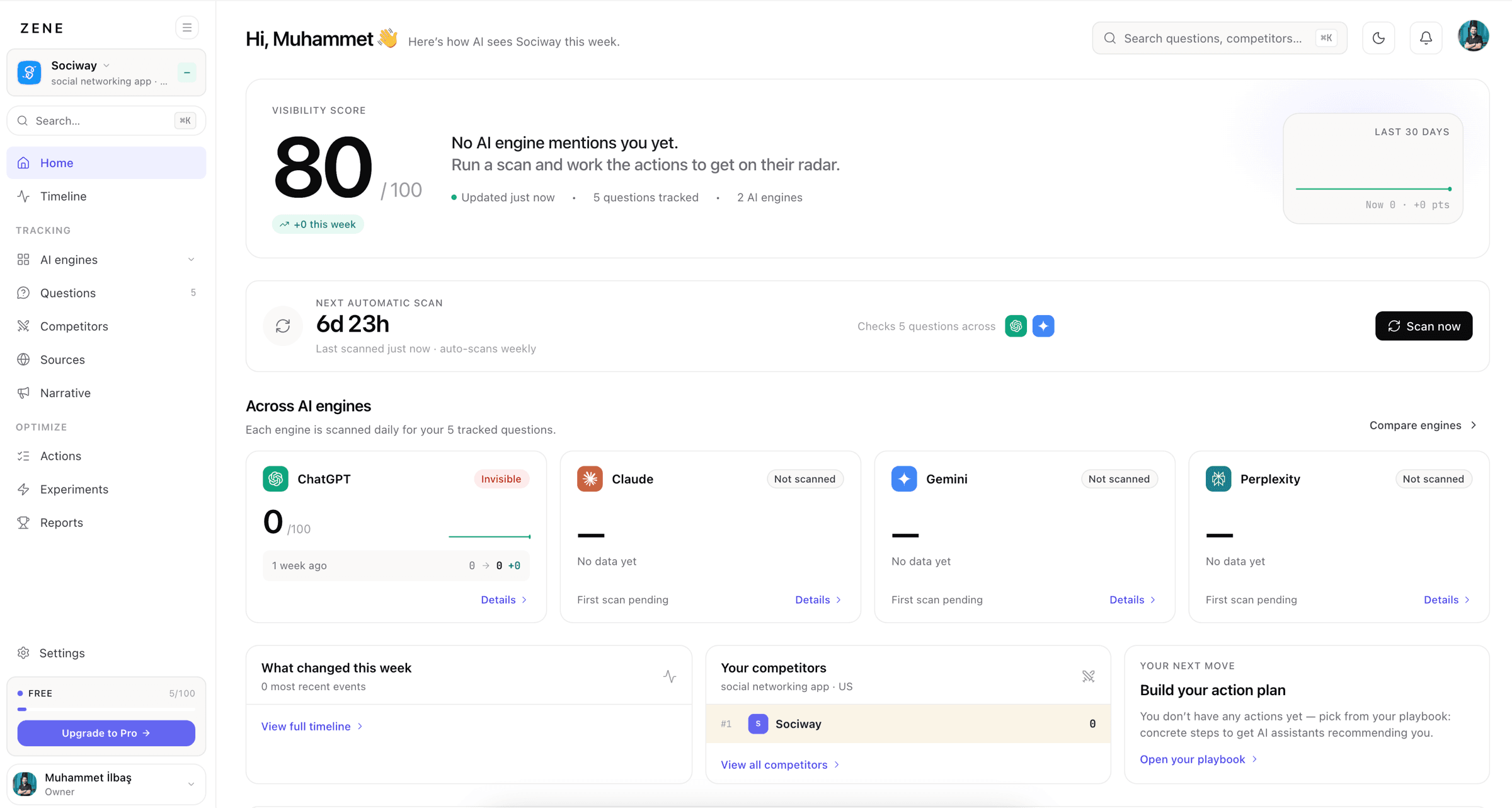
How often, how accurately and how prominently an AI assistant names your brand when someone asks it a question you'd want to win. Four things decide it: how frequently you come up, whether the engine describes you correctly, where you land in the list, and whether it cites your own site as the source. It's the outcome GEO sets out to improve.

Read the playbook
Generative Engine Optimization (GEO)

Getting your brand mentioned and recommended inside the answers AI assistants generate. The AI-era successor to SEO: where SEO optimized for a ranking, GEO optimizes for being in the answer.

Read the playbook

Answer Engine Optimization (AEO)

Optimizing to be the direct answer rather than a result - featured snippets, voice assistants and AI responses. In practice it overlaps almost entirely with GEO.

Read the playbook

LLMO / AI SEO / AISO

Synonyms for GEO coined by different corners of the industry. No meaningful technical difference - pick the questions you need to win and skip the acronym debate.

Read the playbook

How engines build answers

The machinery underneath - and why five engines give five different answers.

Retrieval (RAG)

When an engine searches the live web mid-answer, reads a handful of pages and grounds its response in them. Moves on a fast clock - fix a page and it can be picked up within days.

Read the playbook

Parametric answer

An answer drawn from the model's training data rather than a live search - what it “remembers” about your category. Moves on a slow clock: new presence only lands at the next training cut.

Read the playbook

Citation

A source an engine links to or quotes when composing an answer. The domains that keep appearing are the off-site surfaces worth winning.

Read the playbook

Answer drift

The tendency of AI answers to change run to run and week to week as models update and retrieval re-picks sources. One ask is an anecdote, not a measurement.

Read the playbook

Assets & tactics

The things you actually ship to win the answer.

llms.txt

A proposed plain-markdown file at your site root that gives AI systems a clean summary of what you are and where your key pages live.

Try the tool

Structured data (schema)

Machine-readable JSON-LD that tells an engine which numbers are prices, which text answers a question, and which organization is speaking. Parseable facts get quoted.

Read the playbook

Comparison page

A “you vs the alternative” page whose structure mirrors how buyers ask - the rare asset that wins both the retrieval match and the quote.

Read the playbook

Question set

The fixed list of real buyer questions a brand is tracked against. Keeping it fixed is what makes a visibility trend meaningful rather than noise.

Read the playbook

Measurement

Turning a fuzzy channel into numbers you can act on.

AI visibility score

A single number summarizing how often, and how prominently, a brand appears across a fixed set of questions and engines. Only as honest as its inputs.

Read the playbook

Share of voice

Your slice of the brand mentions in answers to a given query, relative to competitors. Shows not just whether you appear, but who you're losing to.

Read the playbook

AI error / hallucination

When an engine states something wrong about your brand - a retired price, the wrong category, an old name. A correction problem, not an awareness problem.

Read the playbook

Theory's useful. Your numbers are better.

See where your brand actually stands - free, with first results in minutes.

Zene dashboard: a brand's AI visibility score, the next automatic scan, and per-engine cards for ChatGPT, Claude, Gemini and Perplexity