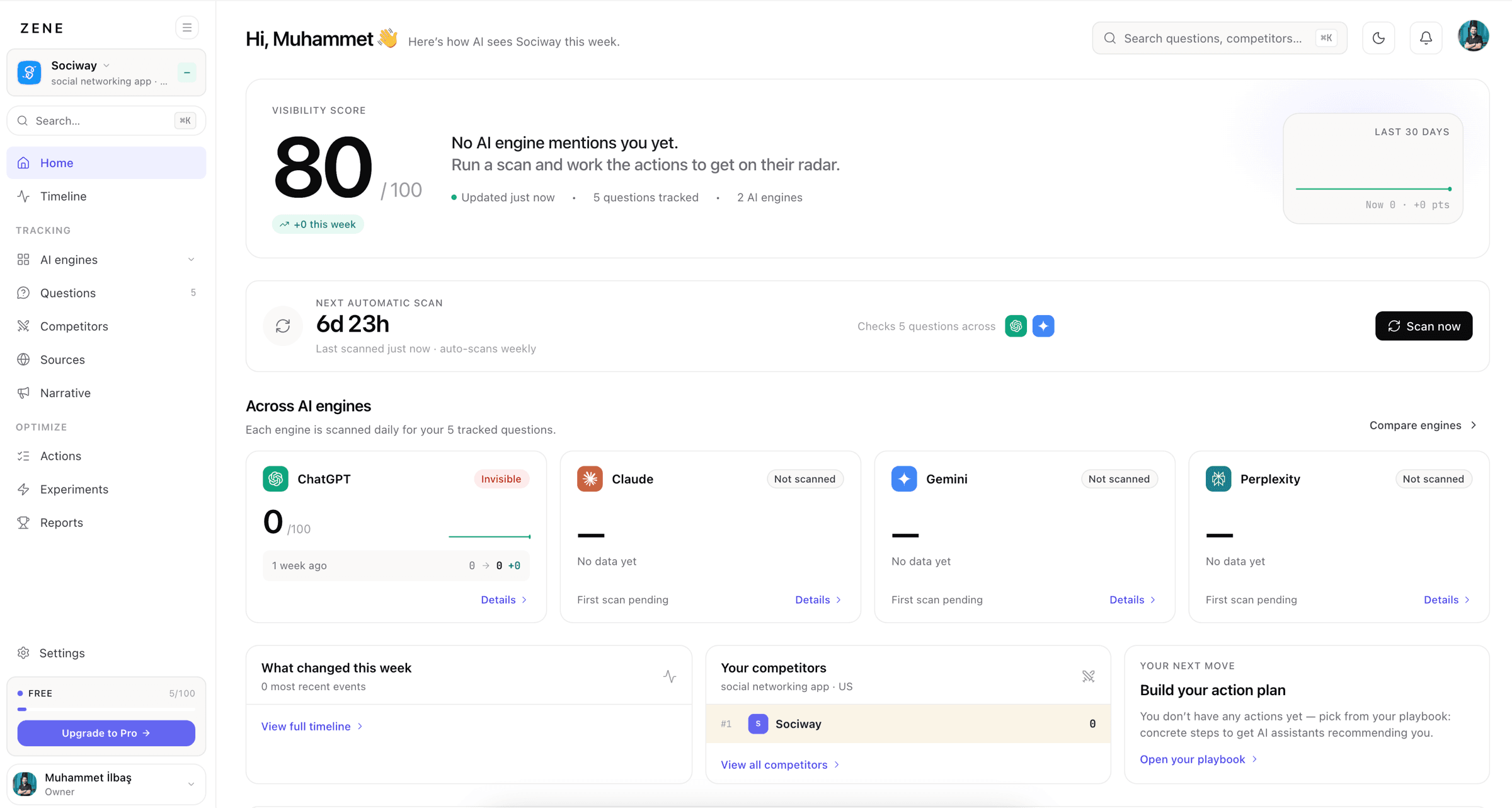
A question we hear a lot: "OK, AI engines don't mention us. What would you actually do?" Fair. Here is the answer in full - a worked example of the 90-day sequence we'd run for a typical B2B SaaS that's invisible to AI today. Nobody can promise you a timeline here, so don't read the week numbers as a guarantee - it's the order we'd work in, and roughly how long each block takes. Stretch or compress it to fit your team.
Days 1–14: baseline and diagnosis
Before writing a word of content, establish facts. Take 20–40 prompts your buyers actually ask - from sales calls, support tickets, search-console queries, in their words, not your feature names - and run every one across all five major engines (ChatGPT, Claude, Gemini, Perplexity and Grok), recording whether you're mentioned, at what position, and which sources get cited.
Then build the citation map: every domain the engines cited across your prompts. This is the real battleground - it tells you which review sites, comparison articles and docs are feeding the answers in your category.
The result is rarely "a bit weak everywhere." It's far more common to be fine in one engine, absent in another, and misdescribed in a third - and each of those needs a different fix, which is why the baseline has to come before you write anything.
Days 15–45: ship the citable core
Now build the small set of assets the engines keep reaching for and not finding:
The comparison page
Whichever competitor kept winning your prompts - that's your first comparison page. Verdict up top, honest trade-offs, real table.
The pricing page rebuild
If engines hedge about your price ("pricing isn't publicly listed" when it is), your pricing page isn't parseable. Get the tiers into server-rendered HTML and write the currency and limits out where a crawler can read them.
The answers hub
One page per recurring buyer question, each opening with a direct answer, each marked up with FAQ schema. Ten focused pages beat one sprawling guide.
Days 46–75: earn third-party presence
Engines distrust brands that only cite themselves. This block is about the citation map from week one:
- Get listed on the review platforms and directories that kept appearing in citations.
- Pitch the comparison articles that rank for your category to include you - many are maintained lists.
- Answer the threads where your team has something useful to say, under real names with the affiliation stated. One disclosed answer that solves the problem outlasts ten anonymous plugs.
Days 76–90: measure and decide
Re-run the full prompt set. Compare against the baseline, engine by engine. Expect movement to be uneven: retrieval-heavy engines (Perplexity especially) respond first because they re-read the web continuously; parametric memory moves on a slower clock. The day-90 numbers tell you where to double down in the next quarter.
That's the whole plan: diagnose, ship the citable core, earn third-party presence, re-measure. Day one is the baseline - run it free and see what the engines say about you today.
Frequently asked questions
How long does it take to get AI engines to recommend your brand?
Nobody can promise a fixed timeline, so treat 90 days as the order to work in rather than a guarantee. The plan runs in four blocks - baseline and diagnosis, shipping the citable core, earning third-party presence, then re-measuring - and you stretch or compress each to fit your team. Movement also arrives unevenly, because retrieval-heavy engines like Perplexity respond first while parametric memory shifts on a slower clock.
What is the first step in a GEO plan?
Establish facts before writing a word of content. Take 20–40 prompts your buyers actually ask - pulled from sales calls, support tickets and search-console queries in their words - and run every one across all five major engines (ChatGPT, Claude, Gemini, Perplexity and Grok), recording whether you're mentioned, at what position, and which sources get cited. From that you build a citation map of every domain the engines cited, which tells you the real battleground in your category.
Why won't AI engines cite my brand even after I publish content?
Engines distrust brands that only cite themselves, so on-site content alone rarely closes the gap. You also need third-party presence - getting listed on the review platforms and directories that keep appearing in citations, pitching the comparison articles that rank for your category, and answering relevant threads under real names with the affiliation stated. One disclosed answer that genuinely solves the problem outlasts ten anonymous plugs.
 Muhammet İLBAŞ 11 min