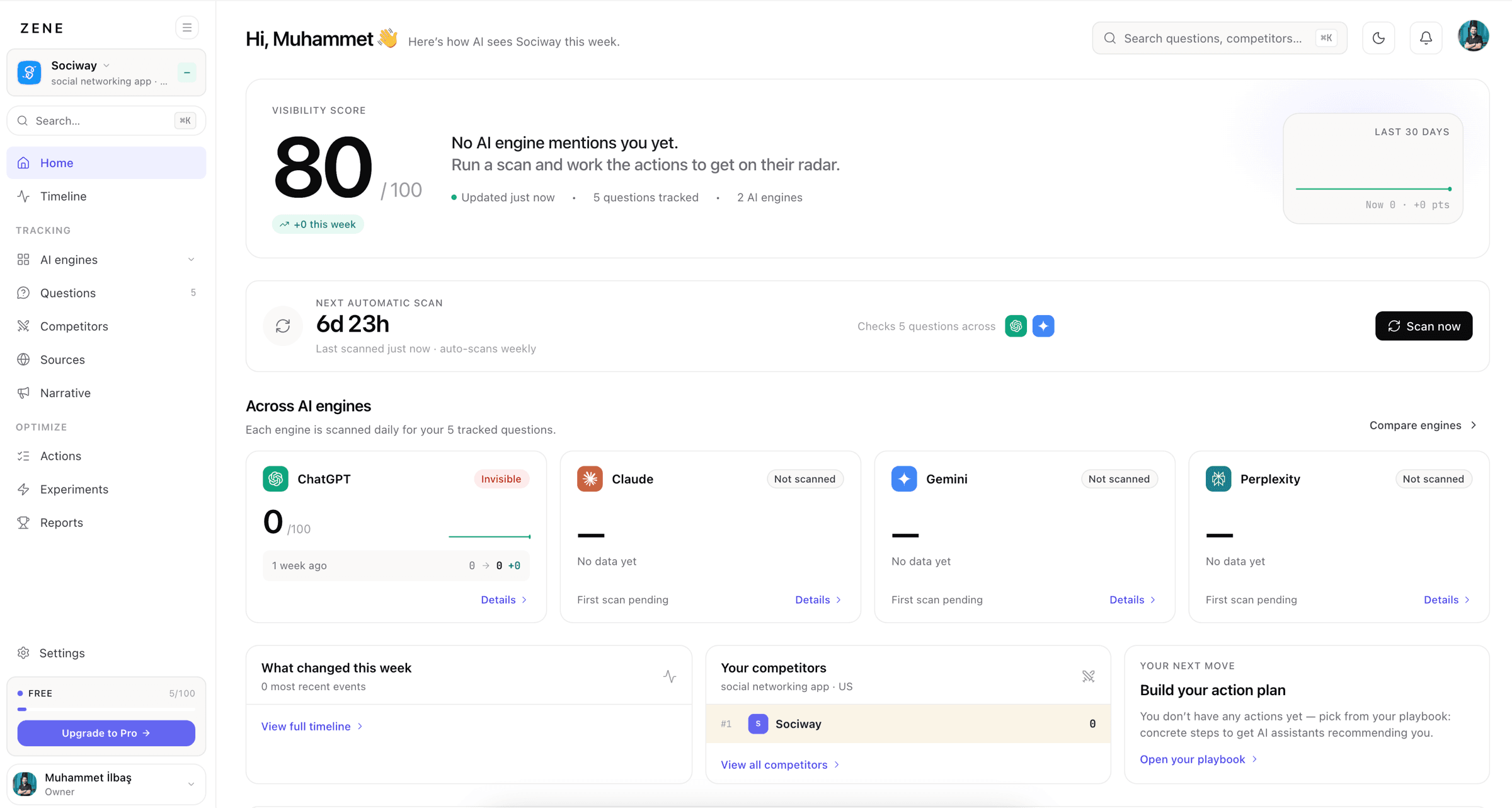
For fifteen years, App Store Optimization had one reader: the store ranking algorithm. You researched keywords, tuned the title and subtitle, A/B-tested screenshots, watched conversion rates - and the algorithm rewarded you with position. That discipline still works, still matters, and is still where most installs start. But your listing quietly acquired a second reader: the AI assistants people now ask for app recommendations - and Google Trends shows the audience arriving, with "apps in ChatGPT" queries surging while classic "what is app store optimization" searches hold steady. The second reader grades on different criteria, and a listing tuned only for the first can fail it completely. This is a field guide to what changed.
What ASO is (and why it isn't going anywhere)
App Store Optimization is the practice of improving how an app's store listing ranks and converts: keyword coverage in the title, subtitle and (on Play) description; visual assets that convert impressions to installs; ratings velocity and update cadence as ranking inputs. It's SEO for the two walled gardens where apps are found - and since store search remains the largest single discovery channel, none of this is obsolete. The change isn't replacement. It's that the artifact ASO produces - the listing - now serves two masters.
The second reader grades differently
When someone asks an assistant "what's the best journaling app with end-to-end encryption?", no store ranking is consulted. A language model assembles a shortlist from what it knows: store listings it has read, reviews and roundups in its training data, whatever live retrieval fetches mid-answer. That reader doesn't score keyword density - it summarizes meaning. It doesn't see your conversion rate - it sees whether your description states plainly what the app does. It can't be A/B-tested - it can only be given better evidence. This is the same shift GEO brought to web search, landing on the app world's doorstep.
Where the two disciplines diverge
- Unit of demand. ASO optimizes for keywords ("expense tracker"); GEO optimizes for questions ("best app to split costs with roommates?"). Keywords want coverage; questions want answers.
- Reader. A ranking algorithm scoring relevance and engagement vs. a language model deciding what it can confidently assert to a user it's advising.
- Keyword repetition. The classic Play-description tactic of working a term in five times is at best neutral for the algorithm now - and actively harmful to the model, which either summarizes you worse or discounts the listing as spam.
- Surface area. ASO ends at the store's edge. The assistant keeps reading: your website, your schema, the roundups that mention you, your presence on the other store. GEO for apps is a whole-footprint game.
- Feedback loop. ASO has dashboards - impressions, conversion, ranked keywords. AI answers have to be asked: the only way to know whether ChatGPT names you is to ask ChatGPT, repeatedly, because answers drift.
Writing for both readers at once
The two readers share one document, so the practical craft is satisfying both without sabotaging either. The reconciliation that works: open for the model, cover for the algorithm. First paragraph - one plain sentence saying what the app does and for whom (the sentence an assistant quotes), followed by natural use-case language ("helps you…", "designed for…") that happens to contain your primary keywords once each. Feature list in bullets - scannable structure both readers reward. Keywords each covered once or twice in real sentences, never chanted. Ratings and freshness - already ranking inputs in classic ASO - carry double weight, because they're also the reputation evidence assistants check before recommending anything.
Then the parts classic ASO never covered: a live developer site linked from the listing, SoftwareApplication JSON-LD, an llms.txt, one consistent app name across both stores. None of it affects store ranking. All of it affects whether the second reader can verify you exist beyond your own claims.
ASO asks: does this listing match the query? GEO asks: would a careful advisor stake their answer on this app? The listing that satisfies the advisor rarely fails the algorithm.
What about OpenAI's apps in ChatGPT?
The surge in "OpenAI app store" searches points at something real: assistants are becoming distribution platforms outright, with apps that run inside the chat. That channel has its own submission mechanics - but notice what decides visibility within it: entity clarity, reputation, a citable footprint. The same evidence. Whether the assistant is recommending your App Store listing or surfacing your ChatGPT app, it's reading the record you built - which makes the GEO work below the waterline the durable investment, whatever the surface becomes.
The takeaway
ASO isn't dead; it grew a second exam. Keep winning store search - and start grading your listing the way the new reader does: quotable opening, natural use-case language, visible traction, citable web presence, one consistent identity. Our free app AI visibility checker scores that second exam in seconds, the playbook walks the fixes, and the engine audit tells you the only number that finally matters: when buyers ask, are you the answer?
Frequently asked questions
What is App Store Optimization (ASO)?
ASO is the practice of improving an app's store listing - title, subtitle, description, keywords, screenshots, ratings, update cadence - so it ranks higher in App Store and Play Store search and converts more of the people who see it. It's the app world's equivalent of SEO: most installs historically start with a store search, and ranking plus conversion decide how many of those searches become users.
Is ASO dead now that people ask AI for app recommendations?
No - it gained a second audience. Store search still drives the bulk of installs, so classic ASO keeps its value. But a growing share of discovery starts as a question to an assistant, and the assistant reads the same listing the store algorithm ranks. The practical shift: your listing now has two readers with different tastes, and the winning move is writing for both - keyword coverage for the algorithm, natural-language answerability for the model.
What's the difference between ASO and GEO for apps?
ASO optimizes for a ranking algorithm inside one store: keywords, conversion rates, engagement velocity. GEO (generative engine optimization) optimizes for language models assembling an answer: quotable descriptions, reputation signals, citable third-party coverage, a consistent entity across stores and the web. ASO wins the query 'expense tracker' typed into a store search box; GEO wins 'what's the best app to track shared expenses?' asked in ChatGPT. The listing is the shared surface - which is why the disciplines converge on it.
Do keywords still matter for app descriptions?
For the store algorithm, yes - coverage still contributes to ranking, especially on Google Play where the description is indexed. For AI assistants, repetition actively hurts: LLMs summarize meaning, and a keyword-stuffed description produces a worse summary of your app, or gets flagged as spammy and skipped. The reconciliation: cover each important term once or twice in natural sentences, and spend the freed-up characters on plain statements of what the app does and who it's for.
 Muhammet İLBAŞ 9 min