Free tool · no signup

llms.txt generator

llms.txt is a plain-markdown file that tells AI systems what your site is and where the important pages are - a sitemap written for language models. Paste your URL and we'll read the page to fill it in, then copy or download the file and serve it at /llms.txt.

Generator

Your llms.txt, drafted

Paste your URL and we'll read the page - name, summary and key links fill in automatically. Edit anything, then copy the file and serve it at /llms.txt.

# Your brand

> Two factual sentences: what you are, who you're for. No superlatives.

## Key pages

- [Home](https://example.com): what Your brand is and who it's for
- [Pricing](https://example.com/pricing): plans, prices and limits
Name, summary and homepage make it shippable.
Anatomy

What goes in the file

Four parts, all optional except the summary. The generator above assembles them for you - here's what each one does.

  • # Brand
    H1 - your nameOne line. The entity the file is about.
  • > Summary
    Blockquote summaryTwo factual sentences: what you are, who it's for. The line you'd want quoted.
  • ## Key pages
    Curated linksHome, pricing, docs - each with a one-line description, so a model knows where to look.
  • Facts
    The facts models missCategory, pricing model, audience - stated plainly so they can't be guessed wrong.
Publish

Ship it in three steps

1

Generate

Paste your URL - we read your page for the brand, summary and key links. Tweak anything, then copy or download.

2

Upload

Save it as llms.txt in your site's public/static root, served as plain text.

3

Verify

Open yourdomain.com/llms.txt in a browser - if it loads as text, crawlers can read it.

Does llms.txt actually work?

Honestly: adoption is still uneven, and no major engine has committed to reading it. We think it's a 20-minute, low-risk bet worth making - and we lay out the real evidence in does llms.txt actually work? The bigger, proven wins come from the pages engines already read: parseable pricing, comparison pages, and schema markup. Treat llms.txt as the cheap finishing touch, not the strategy.

One underrated benefit: writing the two-sentence summary forces a clarity most homepages lack - and that clarity should flow straight back into the pages models do read. If you can't state what you are in a sentence a model could quote, that's the real problem to fix first.
llms.txt questions, answered

A plain-markdown file at the root of your site that gives AI systems a clean summary of what your site is and where the important pages live - essentially a sitemap written for language models instead of search crawlers.

At the root of your domain, so it resolves at https://yourdomain.com/llms.txt. Serve it as plain text (Content-Type text/plain or text/markdown). On most stacks you drop it in your public/ or static directory.

Honestly, the evidence is thin and adoption is uneven - no major engine has committed to reading it. It's a 20-minute, low-risk bet worth making, but the bigger wins come from pages engines already read: parseable pricing, comparison pages and schema markup.

Yes - completely free, no signup, no card. When you paste a URL we fetch that page once to read its title, summary and links; we don't store the page or what you type. Edit anything, then copy or download the file.

Whenever your core facts change - pricing, positioning, key pages. A stale llms.txt that contradicts your live site is worse than none, so keep the summary and links current.

The file is the easy part. The answer is the prize.

See whether AI engines actually mention you today - your visibility on ChatGPT and Gemini free, all five engines on Pro.

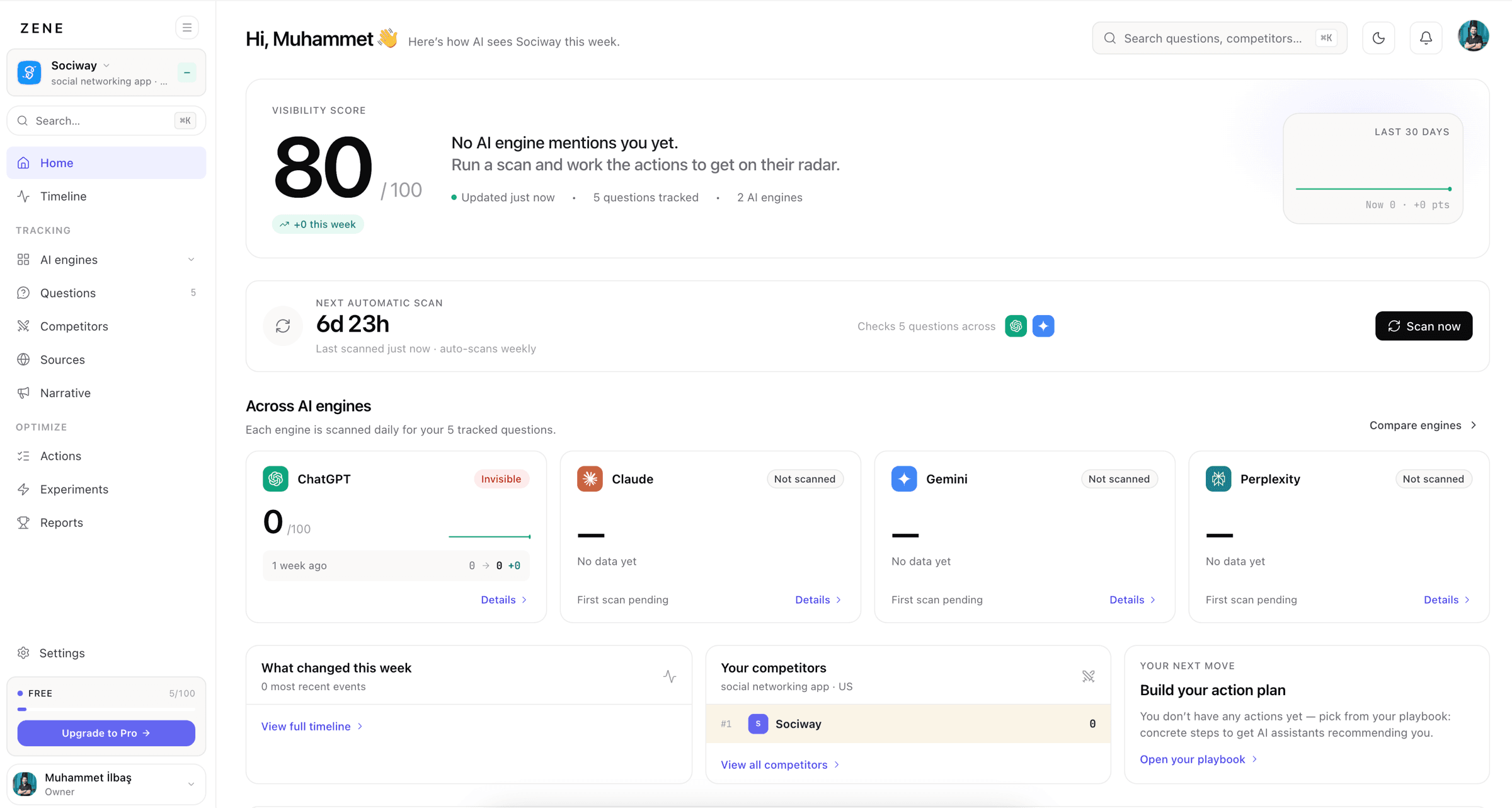
Zene dashboard: a brand's AI visibility score, the next automatic scan, and per-engine cards for ChatGPT, Claude, Gemini and Perplexity