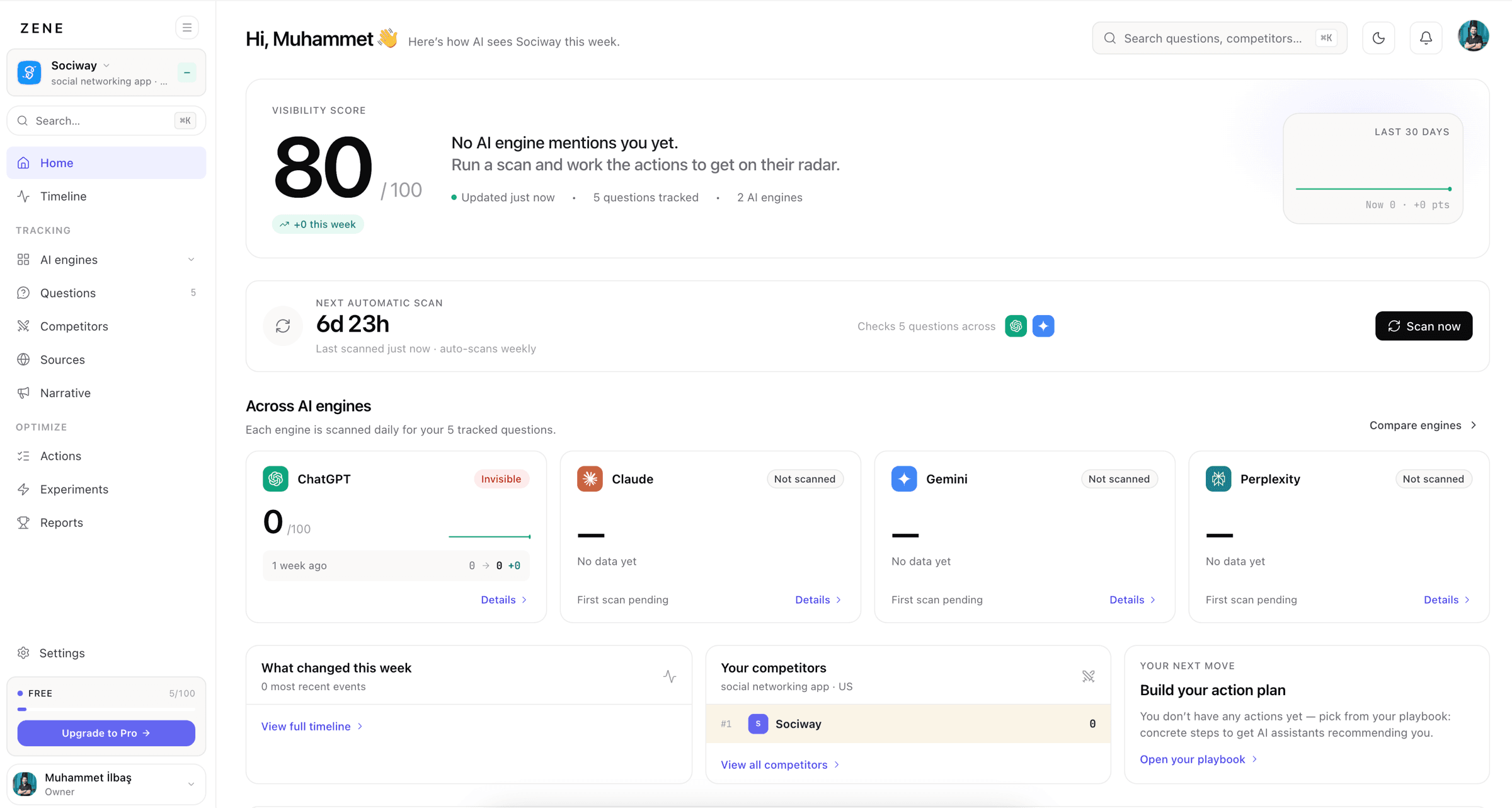
Someone asks ChatGPT "what's a good tool for X?" and it names three brands. You want to be one of them. That's the whole game. Five things move a brand into that answer, and none of them are tricks.
There's no submission form and no rep to call. You can't buy the spot, and the "prompt hacks" people sell on social media don't change what the model says to other people. What works is duller: make yourself easy to quote and hard to confuse - and most of your competitors haven't bothered.
How ChatGPT picks brands now (updated October 2026)
Since August 2026 the process has two visible stages. First, ChatGPT often names candidate brands before it searches: in one independent analysis of 27 conversations on a single account, its first search already contained brands the user never typed in 21 of them, and a brand it named that way reached the answer 68.9% of the time versus 2.1% for brands it only found while searching (directional - one account). Second, it checks candidates on their own websites: site: searches jumped from 0.37% to 16.8% of ChatGPT's queries on August 8, 2026, per Promptwatch (a vendor). So step 4 below gets you into the shortlist, and step 2 decides whether the check on your site confirms you.
1. Find out where you stand (today, not someday)
Ask ChatGPT your buyers' real questions - "best [your category] for [your audience]" - in a fresh chat, signed out. Note who gets named. Do it across all five major engines if you have twenty minutes. Everything else on this list depends on knowing which questions you're losing.
2. Give the engines something to quote
When ChatGPT searches the web mid-answer, it grabs a handful of pages and quotes them. Most brand sites give it nothing to grab: vague headlines, prices hidden behind toggles, no direct answers anywhere. Write the sentence you want repeated - "[Brand] is a [category] tool for [audience], starting at [price]" - and put it on a page that loads as plain HTML. We do this on our own site: the one-sentence version of what Zene is sits in plain HTML on tryzene.com, with the AI crawlers allowed in to read it. Dull, and the first fix we'd make anywhere.
3. Write the comparison your buyers are already asking for
A huge share of AI questions are "X vs Y" or "best alternative to X". If you don't have a page that honestly answers that, the model builds the comparison from whatever it finds - usually a review site, sometimes a competitor. One good comparison page covers dozens of question phrasings.
4. Be present where the model learned to talk
ChatGPT's "memory" of your category came from training data: review platforms, comparison articles, Reddit threads, documentation. If your brand barely exists on those surfaces, the model has nothing to remember. Claim the listings, answer the threads under your real name, earn the mentions. Slow, yes - also the moat.
5. Re-check, because answers drift
Models get retrained, competitors publish, and the shortlist you're on this month can quietly drop you next month. Whatever cadence you can sustain - weekly by hand, or daily with Zene - the brands that win this channel are simply the ones still paying attention.
If you only do one thing this week: run the questions, find the single biggest gap, and ship the page that fills it. One question, one page. Repeat.
Don't want to run the questions by hand every week? Hand that part to Zene - your standing across every major engine, refreshed for you on paid plans (ChatGPT and Gemini free, on demand).
Frequently asked questions
How do I get ChatGPT to recommend my brand?
There's no submission form and no spot to buy - you make yourself easy to quote and hard to confuse, then keep at it. In practice that means finding where you stand today, giving the engines a clear sentence to lift, publishing the comparison your buyers already ask for, and building presence on the surfaces the model learned from. None of it is a trick, and most of your competitors haven't bothered, which is exactly why it works.
Do ChatGPT prompt hacks actually work for visibility?
No. The clever prompts people sell on social media only change what the model says to you in your own chat - they don't change the answer a stranger gets when they ask about your category. The thing that genuinely moves you into other people's answers is duller: quotable pages, honest comparisons, and real presence where the model was trained.
How often should I re-check my brand in ChatGPT?
Often enough that you notice when the shortlist you're on quietly drops you - weekly by hand, or daily with a tool. Models get retrained and competitors keep publishing, so the answer you win this month can change next month. The brands that hold this channel are simply the ones still paying attention.
 Muhammet İLBAŞ 9 min