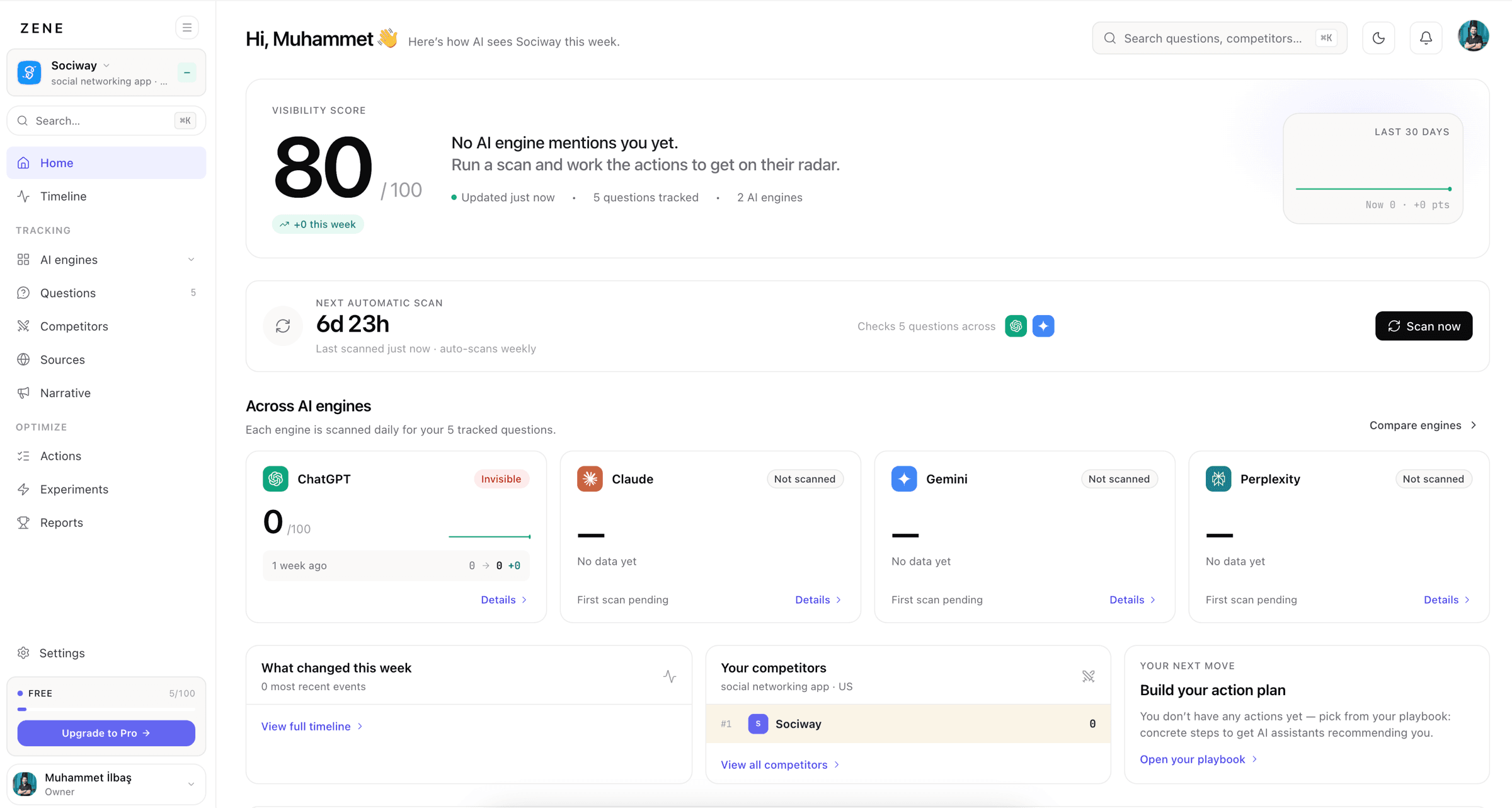
It stings a little. You rank on Google, customers love you, the product is good - and when someone asks ChatGPT about your category, you simply don't exist. No mention, no "also consider", nothing.
Nearly every case we've debugged - our own product included - comes down to one of three problems, and each one has a different fix. Figuring out which is yours takes about ten minutes.
Reason 1: you're not in the training data
ChatGPT's default knowledge comes from a snapshot of the web taken months - sometimes years - before you asked. If your brand is young, niche, or mostly visible in places the snapshot didn't weight heavily, the model never learned you exist. Of the three, this is the slowest to fix: it means building presence on the surfaces training data comes from - reviews, comparisons, communities, press. Your Google rank doesn't transfer; the model isn't reading Google's results page when it answers from memory. (And there's no form to submit your business either - here's what works instead.)
Reason 2: you're invisible to its search
For fresher questions, ChatGPT searches the web before answering. If it searches and still doesn't find you, the problem is your pages: nothing that directly matches buyer questions, content rendered by JavaScript that crawlers can't read, or pages with zero search equity. This one is the fastest to fix, because retrieval rewards specific, parseable pages and you can ship those in a week.
Reason 3: it knows you - under the wrong label
Sometimes the model has heard of you but filed you incorrectly: wrong category, old positioning, a description scraped from a site you redesigned years ago. We live this one - we renamed from PEEX to Zene in June 2026, and the models went right on answering with the old name. So when the right question comes, you don't surface. Test it by asking about your brand directly: "what is [brand]?" If the answer exists but it's wrong, more awareness won't help - start with the correction playbook.
The ten-minute diagnosis
- Ask "what is [your brand]?" - if it draws a blank: reason 1. If it's wrong: reason 3.
- Ask a buyer question and watch whether it searches the web. If it searches, reads, and still skips you: reason 2.
- Repeat in Perplexity and check the citations - the sources it picks tell you exactly which pages are winning your category.
Try it on your brandFind out which of the three reasons is yours.
Type your brand name or domain - we'll line up the questions buyers ask about it.
Frequently asked questions
Why doesn't ChatGPT know my brand?
Nearly every case comes down to one of three problems, each with a different fix. Either you're not in the training data, you're invisible to the engine's web search, or it knows you but has filed you under the wrong label. Figuring out which one is yours takes about ten minutes, and it matters because the fixes look nothing alike.
Why is my brand absent from ChatGPT when I rank on Google?
Because your Google rank doesn't transfer - the model isn't reading Google's results page when it answers from memory. ChatGPT's default knowledge comes from a snapshot of the web taken months, sometimes years, ago, so if your brand is young, niche or mostly visible in places that snapshot didn't weight heavily, it never learned you exist. Fixing that means building presence on the surfaces training data comes from: reviews, comparisons, communities and press.
How do I find out which reason is keeping me out of AI answers?
Run a ten-minute diagnosis. Ask "what is [your brand]?" - a blank means you're not in the training data, a wrong answer means you've been filed under the wrong label, and if it searches the web, reads, and still skips you on a real buyer question, your pages are the problem. Repeat in Perplexity and read the citations, because the sources it picks tell you exactly which pages are winning your category.
 Muhammet İLBAŞ 9 min