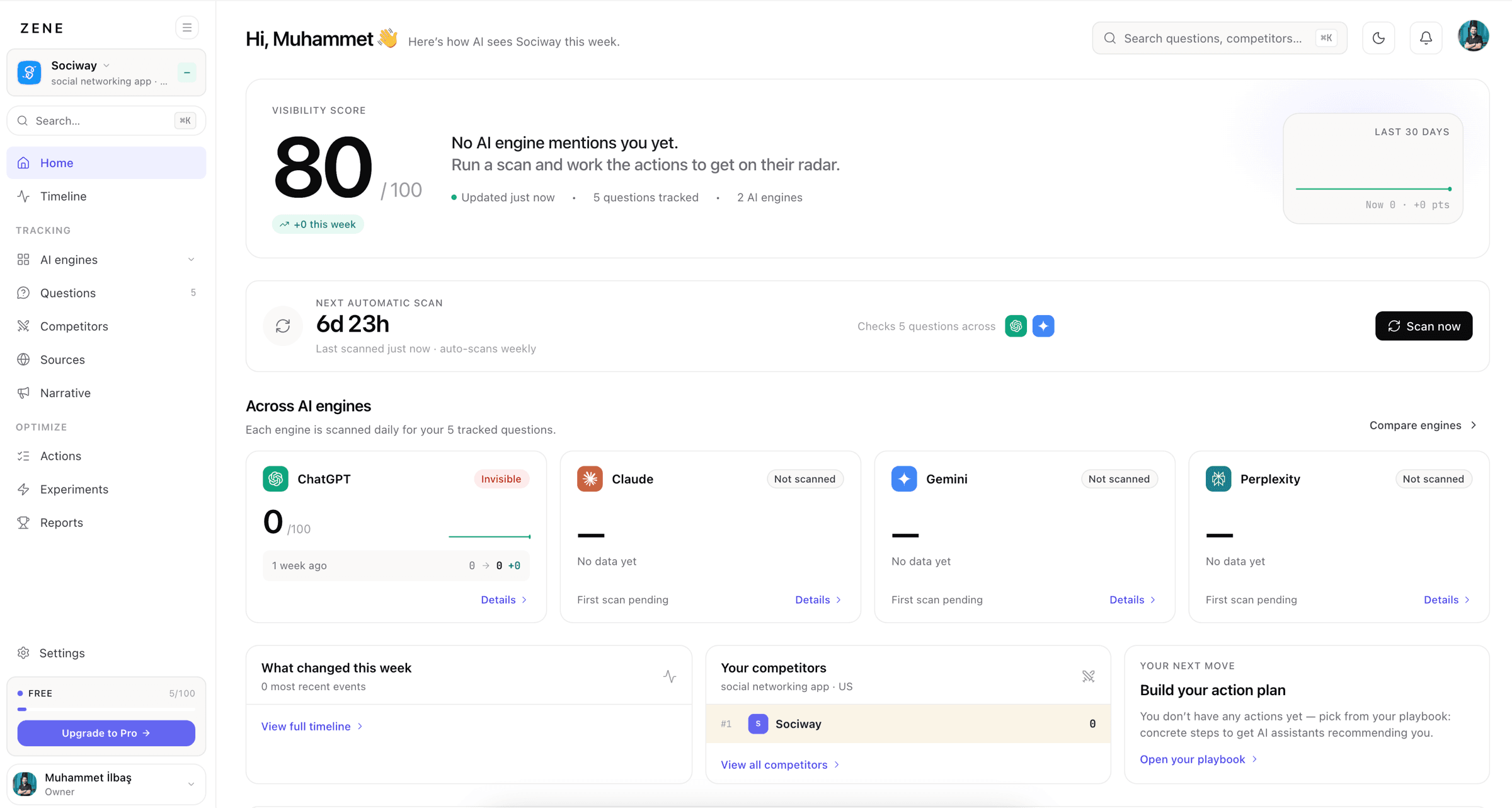
Before you buy any tool - ours included - you should run the free version of this audit yourself. It takes about ten minutes, costs nothing, and the result usually settles the "do we need to care about AI visibility?" debate one way or the other.
Step 1: collect real buyer questions
The biggest mistake in self-testing is asking about yourself: "What is [your brand]?" Almost every model will answer that politely - it proves nothing. Your buyers don't ask about you; they ask about their problem. Pull five to ten questions from the places where buyers say what they actually want:
- Sales calls and demo requests - what did the prospect say they were looking for?
- Support tickets and onboarding surveys - "we switched from X because…"
- Search Console - the queries you already rank for, rephrased as questions.
Good prompts look like "best [category] for [audience]", "[competitor] alternatives", "is [category tool] worth it for a small team?" When you're ready to build a longer list, our guide to prompt research for AI visibility covers more sources and how to sort them by intent.
Step 2: ask cleanly
Two rules, both about contamination:
- Use a fresh session per question. Models carry conversation context; once your brand has been mentioned, every later answer is biased toward it.
- Don't ask while signed in with memory on. ChatGPT's memory feature personalizes answers. You want the answer a stranger gets, not the answer you get.
Step 3: score what you see
For each question, record three things: are you mentioned at all, at what position (first recommendation vs. an "also consider"), and is the description accurate. A mention that misstates your pricing or pitches you for the wrong use case is its own problem - we wrote a separate playbook for correcting AI errors.
Also note who does get recommended. The brands that keep appearing in your prompts are your real competitive set in this channel - which may not match who you compete with in Google.
Step 4: repeat across engines
ChatGPT alone is not the test. The major engines disagree more than you'd expect - same question, different shortlists. At minimum, run your set through ChatGPT, Claude, Gemini and Perplexity and score each separately. Perplexity earns special attention because it shows its sources - those citations are a map of which pages you need to win.
The limits of manual testing
This audit gives you a snapshot. Its weaknesses: one run is one sample (models vary their answers), ten questions is a narrow window, and a snapshot can't show drift - the competitor who overtakes you in next month's answers. That's the part you can't keep up by hand: rerunning the same set across every engine and noticing what shifted since last week.
Try it on your brandOr skip the spreadsheet - stage the same audit here.
Type your brand name or domain - we'll line up the questions buyers ask about it.
Run the manual version today - it costs nothing and usually lights a fire. When the spreadsheet gets old, Zene's audit reruns your whole question set on a schedule and turns the gaps into an action list.
Frequently asked questions
How can I check if ChatGPT knows my brand for free?
Ask it five to ten real buyer questions in a fresh, signed-out session and record whether you're named, where you land, and whether the description is accurate. The whole audit takes about ten minutes and costs nothing. Repeat the same set across Claude, Gemini, Perplexity and Grok, because the engines disagree more than you'd expect.
Why shouldn't I just ask ChatGPT "what is my brand?"
Because almost every model will answer that politely, which proves nothing. Your buyers don't ask about you - they ask about their problem, so test the questions they'd actually type, like "best [category] for [audience]" or "[competitor] alternatives". Asking about yourself only flatters you.
Do I need a fresh chat to test ChatGPT honestly?
Yes - use a fresh session per question and turn memory off or stay signed out. Models carry conversation context, so once your brand has been mentioned every later answer is biased toward it, and ChatGPT's memory personalises results to you. You want the answer a stranger gets, not the answer you get.
 Muhammet İLBAŞ 9 min